
Rocky Mountain Driveline Forum
Exchange on transfer case service records, axle breather routing, and 4WD scan field interpretation for high-altitude routes.
About the program
echinodermx — preparing your vehicle for operation off paved roads. The platform helps owners of off-road capable vehicles maintain excellent technical condition for trails, backcountry routes, and expedition travel through structured learning formats and neutral maintenance vocabulary. We publish neutral definitions, structured learning formats, and explicit educational boundaries for owners preparing vehicles for trails and expeditions across the United States.
Information before authorization
Our mission is to translate off-road vehicle technology into readable reference modules. Many licensed facilities produce thorough reports, yet field names for four-wheel drive tests, suspension measurements, and tire load documentation remain opaque. echinodermx closes that gap with structured explanations owners can review before and after shop visits.
We position the portal as an educational reference, not a substitute for licensed repair work. Each module passes editorial review: symptoms are separated from observation categories, and multiple diagnostic pathways are described instead of single-path recommendations.
The focus covers trail-ready SUVs, pickup trucks, and expedition platforms — where drivetrain, chassis, and electrical systems face terrain loads beyond typical commuting patterns.
We identify recurring questions from trail communities and shop feedback: transfer case fluid notes, shock absorber categories, skid plate hardware checks, and expedition tire logs. Priority goes to safety-relevant and documentation-heavy topics.
Contributors with driveline, chassis, and electrical focus align component names, scan fields, and typical wear categories using manufacturer documentation and recognized inspection practices — without claiming proprietary procedures.
Terms receive neutral definitions; diagrams and checklists support long-form reference. The goal is material you can discuss with a service advisor using shared vocabulary — not promotional copy.
Model year changes, scan tool export formats, and shop portal field updates trigger revisions so older platforms and current vehicles remain covered in the same learning framework.
echinodermx consults selected training networks to align modules with real workshop documentation. Partnerships support editorial validation — not endorsement of individual brands or commercial outcomes.
Exchange on transfer case service records, axle breather routing, and 4WD scan field interpretation for high-altitude routes.
Practical notes on suspension inspection categories, alignment report fields, and loaded-vehicle ride height documentation.
Updates on auxiliary power documentation, battery test fields, and wiring protection vocabulary for remote travel.
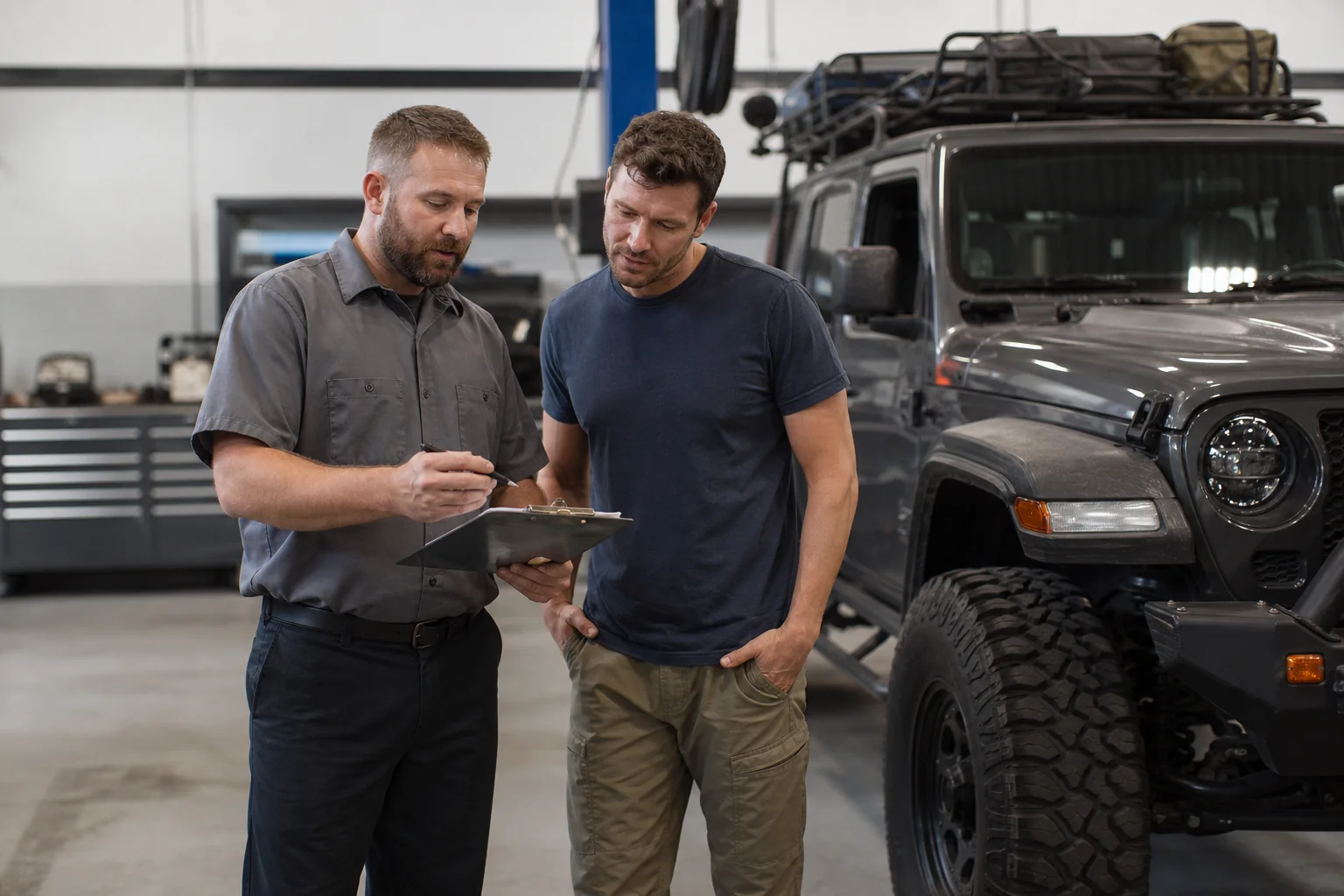
Transfer case modes, axle fluids, and scan tool plausibility fields — with typical documentation patterns before parts authorization.
Skid plates, impact shields, and expedition load documentation — when inspection categories matter more than part marketing language.
Checklists connecting observations to shop dialogue points, plus financial planning vocabulary for service document line items.
We describe what is technically plausible in documentation — not what should be sold. When a review category applies only under specific conditions, that context appears in the module outline.
Neutrality: No preferred presentation of individual shop chains or parts suppliers. Comparisons use criteria such as documentation transparency and field completeness.
Traceability: When measurements or thresholds are cited, we note the measurement context so entries can be reused in shop conversations.
Availability: Reference questions are accepted through our contact queue at any hour — including weekends and holidays.
Continuing education: Editors participate in internal updates on assistive system terminology, trail safety vocabulary, and financial planning fields used in service portals.

Editorial coordination for echinodermx operates from our Denver office at 1675 Broadway, Suite 920, Office 920. Inquiries are routed, modules reviewed, and callback scheduling managed from this location.
No vehicle intake occurs on site; hands-on service remains with licensed partner facilities when owners choose external providers. Our core work is educational reference for documentation literacy.
1675 Broadway, Suite 920, Office 920, Denver, CO 80202, United States
Questions about editorial process, partnerships, or a specific module topic? Write or call — we are available around the clock.
Contact pageIn-depth modules on four-wheel drive, suspension, underbody protection, and expedition tires — with clear reading times.
Resource libraryechinodermx provides educational reference material about off-road vehicle preparation, diagnostic vocabulary, and trail readiness — including four-wheel drive inspection fields, suspension review categories, underbody protection terminology, transmission check logs, tire evaluation formats, brake observation notes, engine diagnostic reading, auto electrical reference modules, expedition planning outlines, and practical recommendation structures. Content on echinodermx.info supports orientation and does not replace individual assessment by a licensed repair facility or manufacturer service documentation.
Technical descriptions, checklists, and field definitions are based on general practice and editorial research. Observed conditions on any vehicle depend on model year, equipment level, prior service history, terrain use, and the qualification of the performing workshop. echinodermx is not responsible for damage, breakdowns, or consequences arising from applying published guidance without professional verification.
References to partner workshops or cooperative networks describe editorial context for content validation — not availability of specific services, parts, or pricing at a given location. For binding quotes, warranty terms, and hands-on evaluation, contact a licensed provider directly.
When work involves drivetrain components, steering, brakes, restraints, or high-voltage systems, we recommend consulting a qualified facility before authorizing modifications. echinodermx describes learning formats and information delivery; operational decisions remain your responsibility together with your chosen service provider.