Tire documentation for mixed terrain travel
Expedition routes combine highway speeds, gravel, and low-traction surfaces. Tire logs record tread depth, age codes, sidewall observations, and pressure settings for loaded vehicles. Educational content explains field names without directing specific tire models.
Tread depth and wear pattern fields
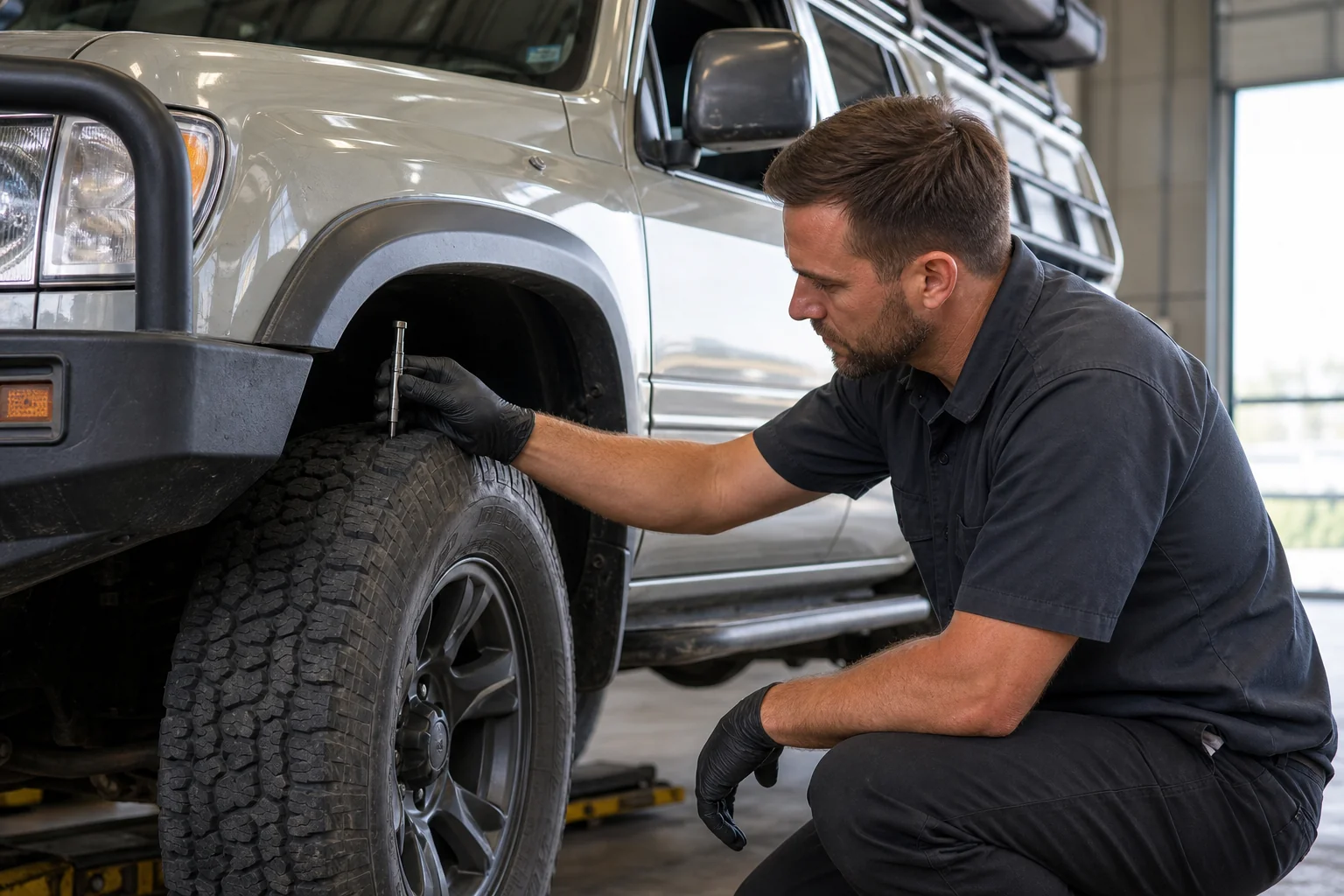
Technicians measure groove depth at multiple points per tire. Wear pattern notes — center wear, edge wear, cupping — describe observation categories that inform alignment or pressure discussions with a licensed facility.
- Tread depth reading: Recorded in 32nds of an inch or millimeters at inner, center, and outer points.
- Wear pattern category: Visual classification of uneven wear across the tread face.
- Sidewall inspection: Cuts, bulges, or aging cracks noted during walk-around.
- DOT age code: Week and year of manufacture from tire sidewall marking.
Load index and speed symbol literacy
Loaded expedition vehicles approach tire capacity limits when carrying passengers, water, and recovery gear. Modules define load index numbers and speed symbols as specification fields — not recommendations for a specific trip.
Pressure settings for on-road and low-traction segments
Some preparation documents record separate pressure targets for highway and low-speed trail segments. Educational modules explain why dual entries appear and how to document adjustments in a travel log format.
Spare tire and repair kit fields
Full-size spares, compact temporaries, and inflation kits appear on pre-route checklists. Neutral definitions describe what each category means in manufacturer documentation.
Summary
Expedition tire inspection education focuses on tread and load documentation, pressure log vocabulary, and neutral preparation formats for off-road travel.
Educational modules on echinodermx.info describe documentation formats and neutral terminology. Hands-on evaluation requires a licensed facility familiar with your vehicle platform and terrain use.