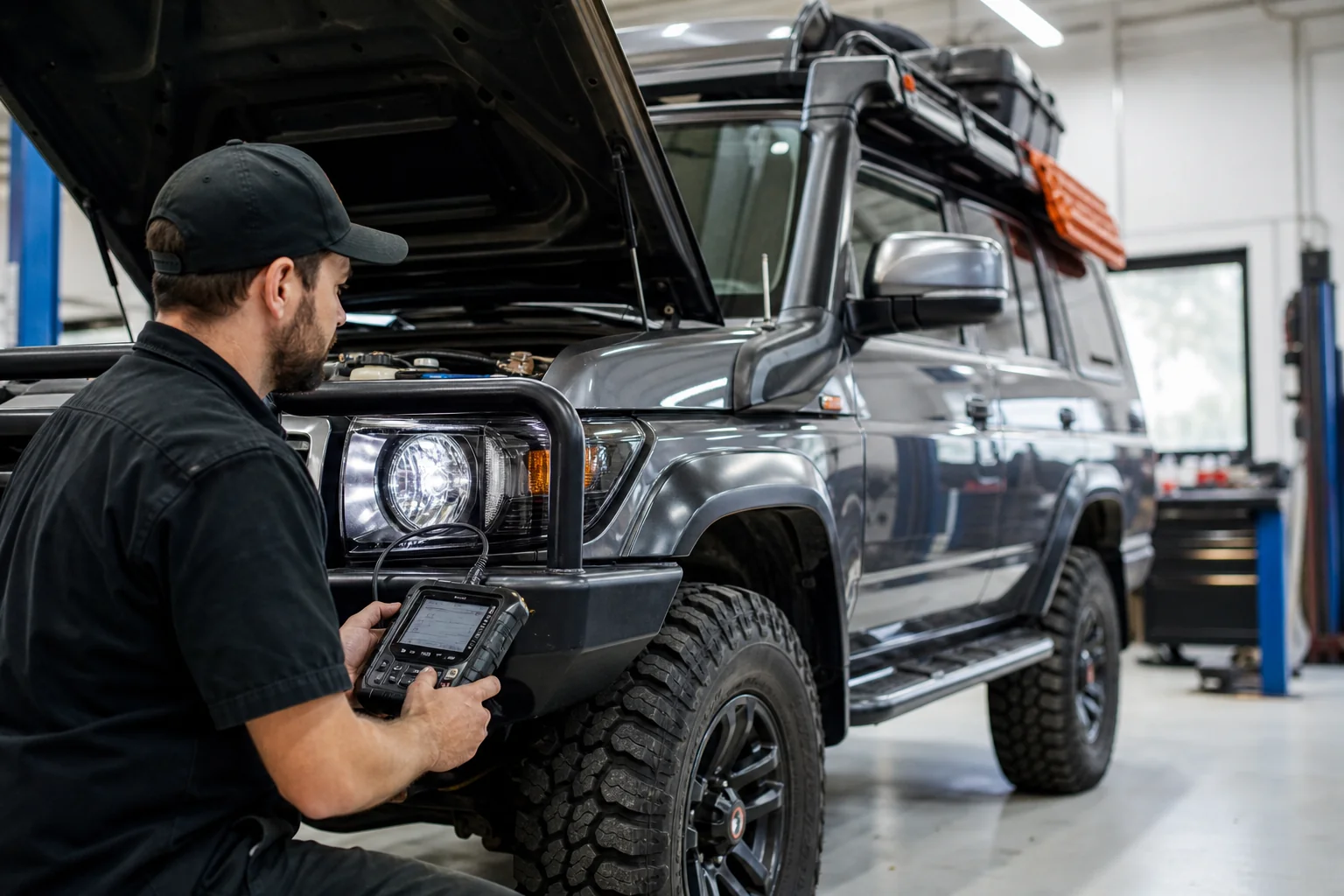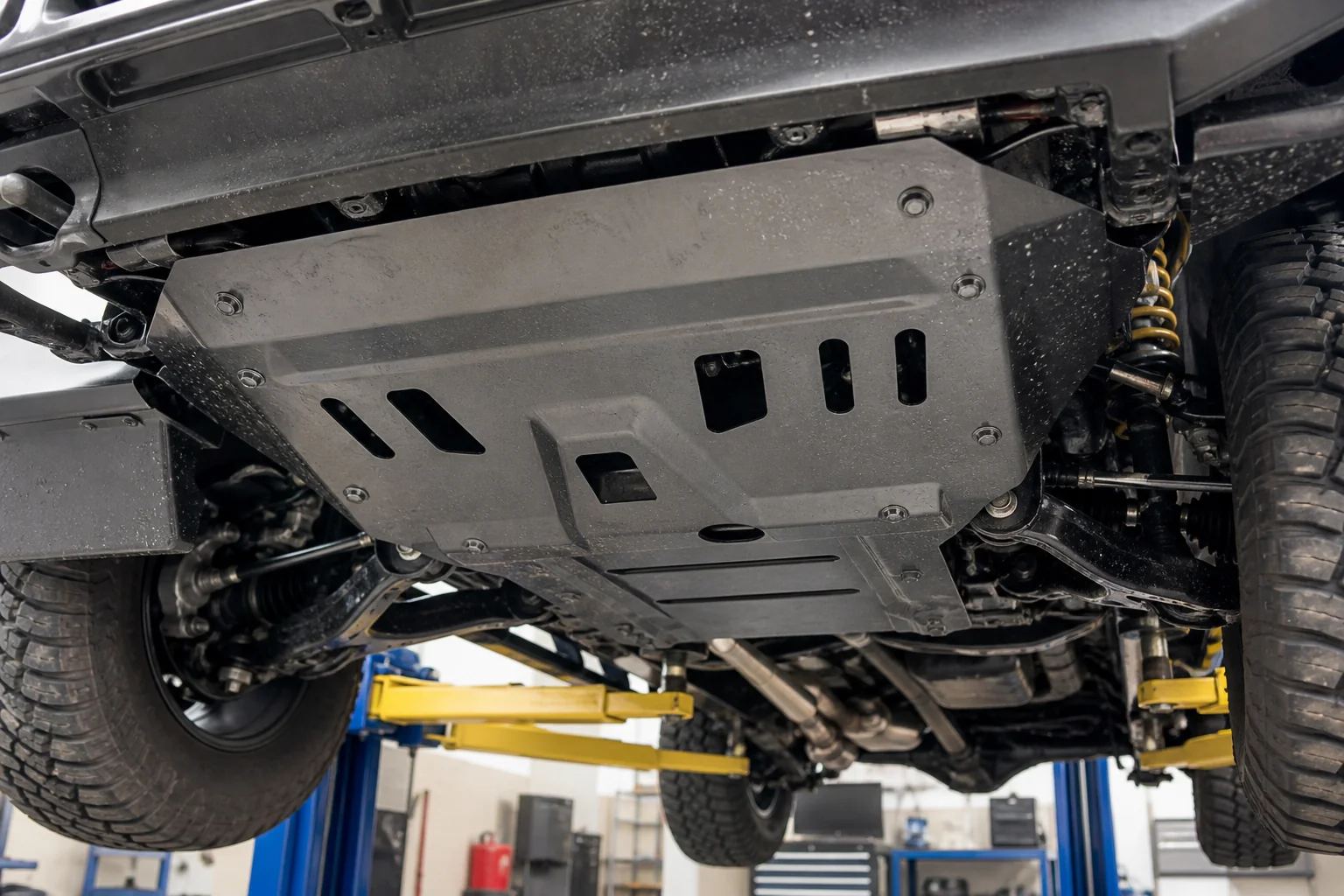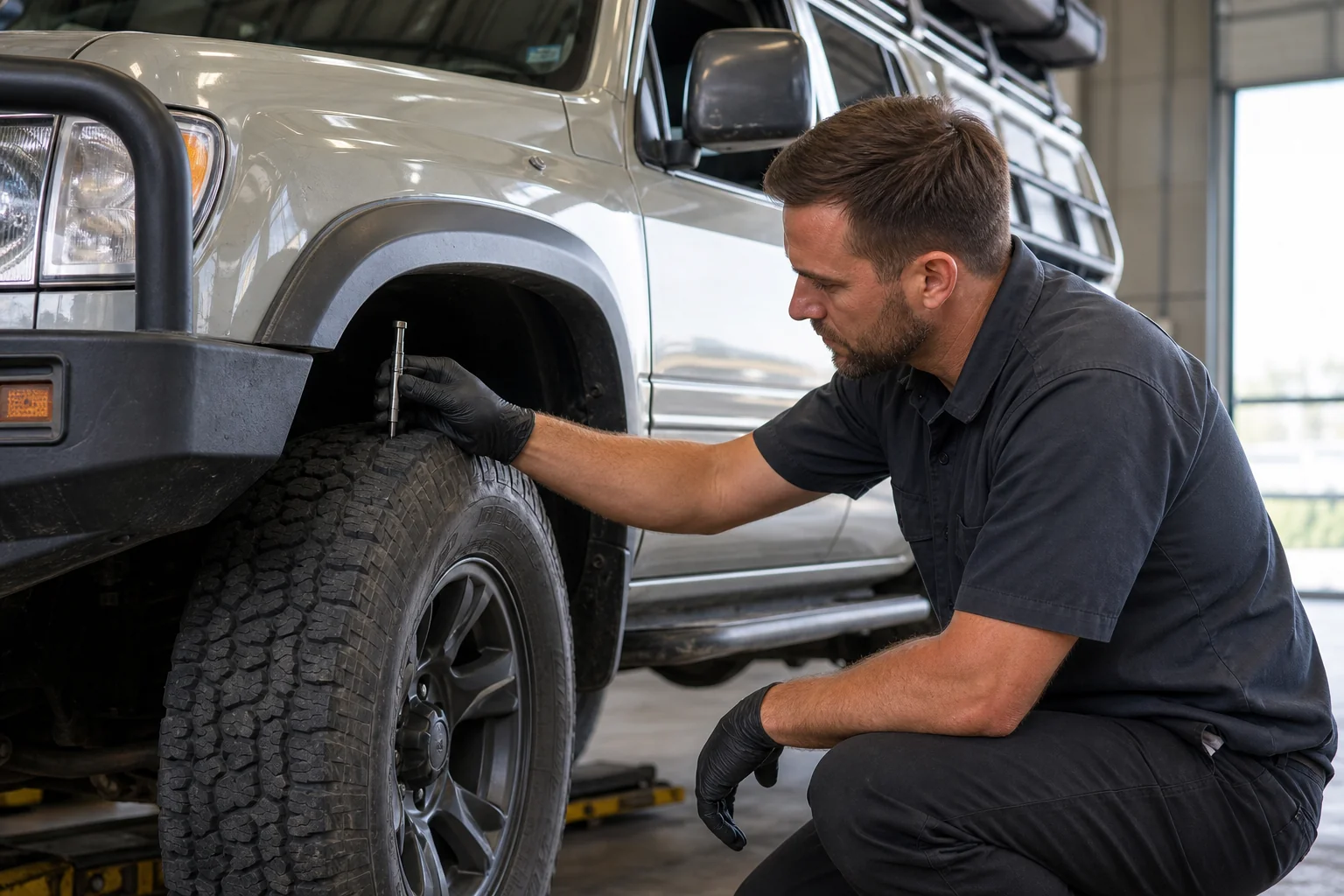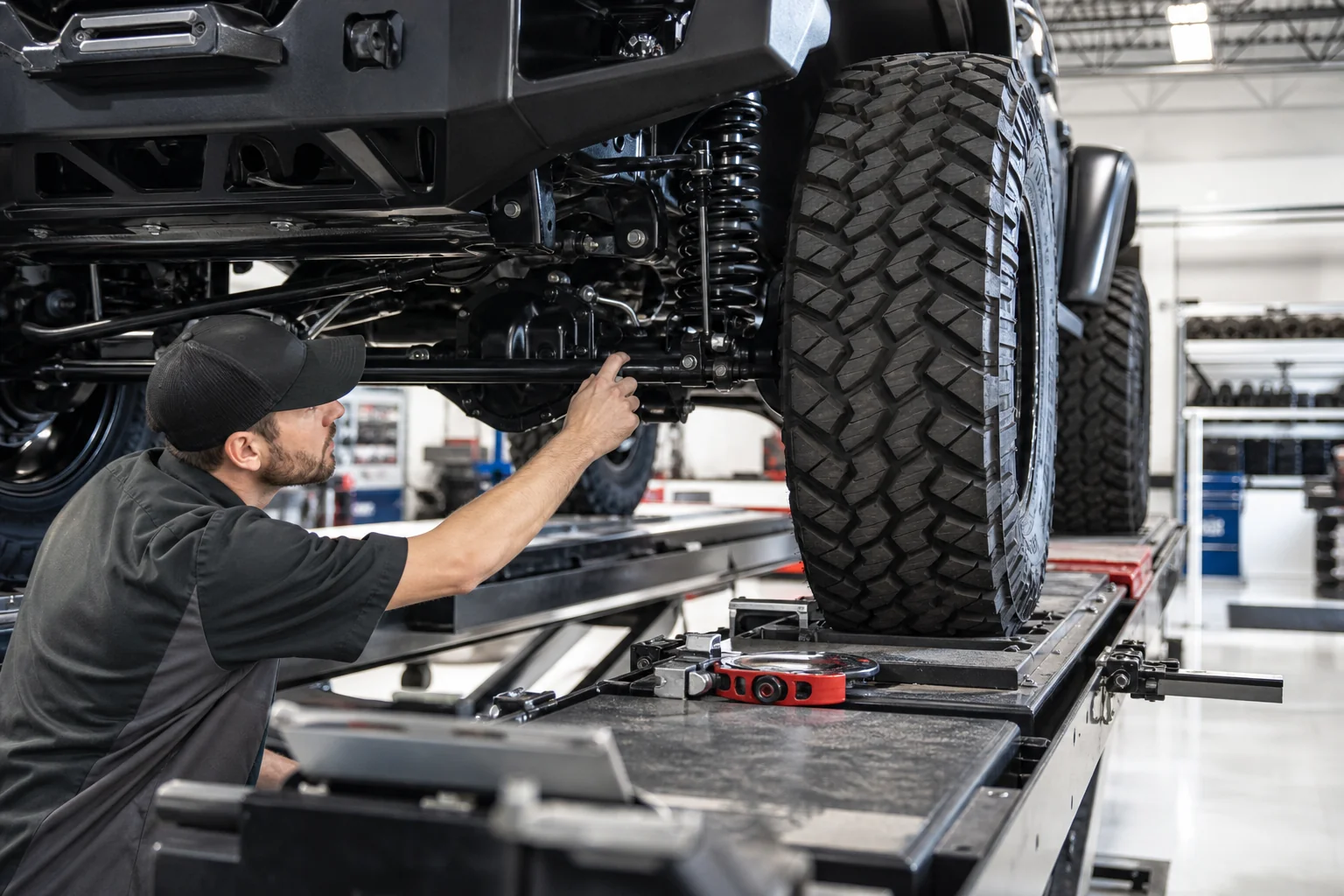
Terrain load and suspension documentation
Uneven trails transfer repeated impacts through control arms, links, and dampers. Inspection reports record wear categories that may differ from daily commuting assessments. Educational modules explain how to read these fields before a trail season without assuming every notation requires immediate part replacement.
Lift kits and load-bearing accessories change reference geometry. Reports may include ride height measurements compared to baseline values — understanding measurement points prevents misreading aftermarket configurations.
Shock absorber and damper report fields
Technicians document external leaks, mounting bushing condition, and rebound behavior during bounce tests. Neutral definitions clarify that subjective bounce tests supplement — but do not replace — manufacturer test procedures where specified.
- Leak observation: External fluid traces on damper body or seal area.
- Mount condition: Cracked rubber, torn isolators, or loose hardware at top and bottom mounts.
- Travel test notes: Observations during controlled compression and extension.
- Mileage since last replacement: Historical context when prior service records are available.
Bushings, ball joints, and steering linkage
Trail vibration accelerates bushing wear in control arms and track bars. Reports may use movement categories — acceptable play, monitor, or recommend review — that require understanding of measurement method.
Tie rod and drag link end play appears on alignment-related documents. Educational content separates alignment angle fields from mechanical wear observations so owners can discuss priorities with a licensed facility.
Springs, coils, and leaf pack vocabulary
Sagging ride height may indicate spring fatigue or added constant load from expedition equipment. Modules describe how arch measurement or coil gap notes appear on inspection forms without prescribing specific lift corrections.
AI-assisted checklist formats
Some editorial workflows use artificial intelligence to organize dense suspension inspection templates into section summaries. Human editors verify field names and maintain educational boundaries. AI does not publish autonomously on echinodermx.info.
Connecting suspension literacy to shop conversations
When scheduling pre-trail service, owners who understand suspension vocabulary can ask: Were measurements compared to manufacturer specification? Which components were load-tested versus visual-only? Which items are monitoring categories?
Educational materials emphasize that approving work is separate from understanding document meaning.
Summary
Suspension trail readiness education focuses on chassis report literacy, damper and bushing field definitions, and neutral planning vocabulary for expedition preparation.
Educational modules on echinodermx.info describe documentation formats and neutral terminology. Hands-on evaluation requires a licensed facility familiar with your vehicle platform and terrain use.